
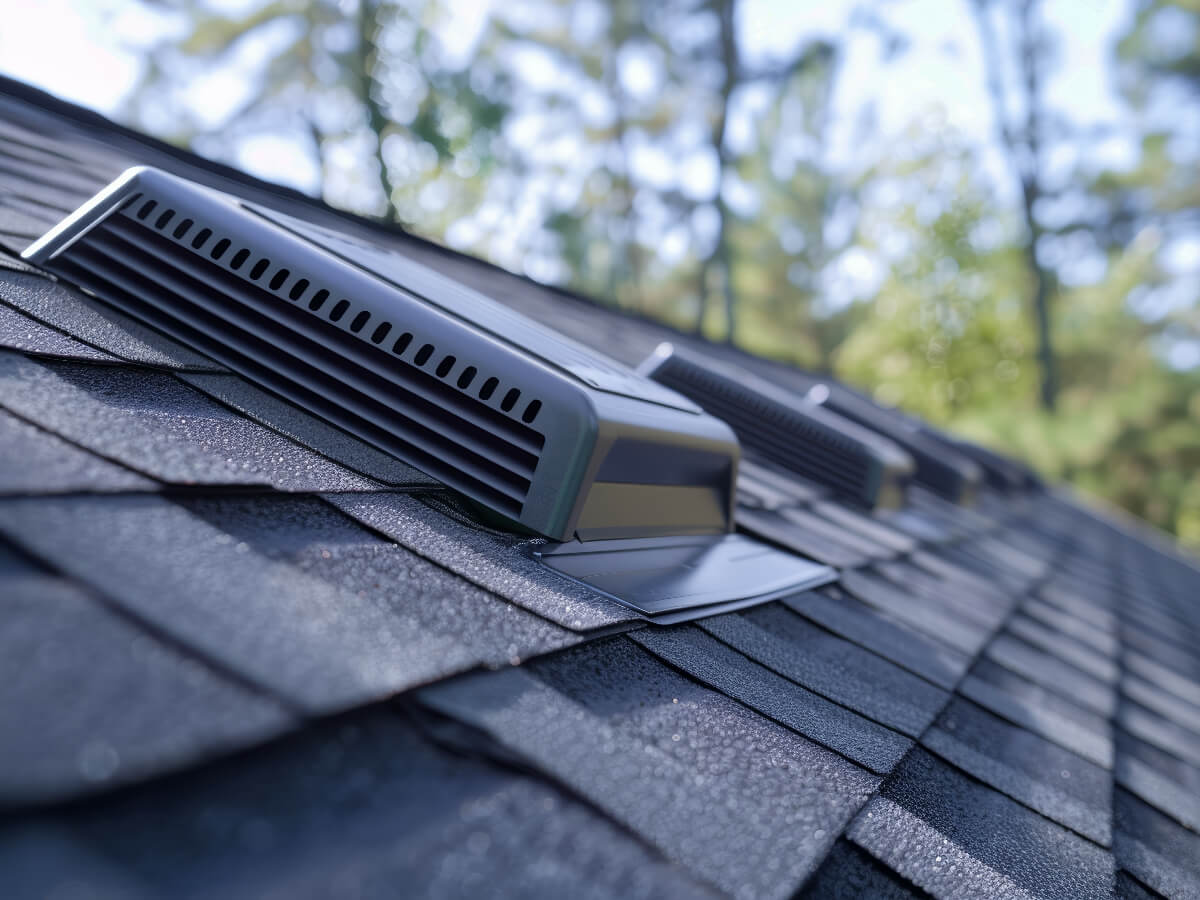
When thinking about your roof, you probably focus on shingles, but lurking beneath the shingles is a silent, hard-working system that is just as critical: roof ventilation. Most homeowners overlook attic and roof ventilation – until they face blistering hot rooms, skyrocketing energy bills, or, premature roof failure and pervasive mold growth.
This guide reveals the essential role of a roof ventilation system and explains why it’s the key to maintaining an energy-efficient home and maximizing the lifespan of your roof.
The Dual Role of Roof Ventilation
Proper attic ventilation isn’t about simply letting air in; it’s about managing temperature and moisture year-round. It performs two crucial functions that directly protect your home:
1. Heat Management
During the summer, the sun bakes your roof, and temperatures in an attic can soar above 150 degrees Fahrenheit. This extreme heat causes several problems:
Higher Energy Bills: Heat radiates from the attic down into your living spaces, forcing your air conditioner to work overtime. Effective ventilation allows this heated air to escape, keeping your cooling costs down.
Premature Shingle Deterioration: Excessive attic heat bakes shingles, causing them to curl, crack, and fail years before their warranty expires.
2. Moisture Management
In the winter, the problem shifts from heat to moisture. Sources like showering and cooking push warm, moist air into the attic.
Ice Dam Prevention: In cold climates, rising heat melts snow on the upper roof, which then refreezes at the colder eaves (the edge of the roof). This creates ice dams that force water under the shingles, leading to leaks and interior water damage. Ventilation keeps the attic temperature consistent with the outside air, preventing this melt-and-freeze cycle.
Mold and Mildew Growth: Trapped moisture condenses on the wooden structure of your attic. This is the ideal environment for toxic mold and mildew to thrive, leading to poor indoor air quality and structural rot.
Three Components of an Effective Roof Ventilation System
A successful roof ventilation system is balanced, requiring both intake and exhaust. It operates on the principle of passive airflow: cool air enters low, pushes hot/moist air out high.
Intake Vents: Located under the eaves (Soffit Vents) or near the bottom of the roof allow cool. fresh air into the attic.
Exhaust Vents: Located near the park or ridge of the roof (Ridge Vents, Gable Vents, Static Vents) allow hot, stale, or moist air to escape attics.
Baffles: Installed at the eaves to guide air over the insulation ensures the insulation does not block the intake vents.
The most efficient design uses Ridge Vents (running along the peak) paired with Soffit Vents (under the eaves). This combination provides continuous, uniform airflow across the entire attic space.
Warning Signs Your Ventilation System Is Failing
If you notice any of these signs, it’s time to have a professional assess your ventilation system:
Visible Mold: Dark, patchy spots on the underside of the roof sheathing or roof rafters.
Warped Shingles: Curling or buckling shingles, especially along the roof ridges.
Excessive Heat: Your upstairs rooms are significantly warmer than the downstairs, even with the AC running.
High Energy Bills: An unexpected spike in heating or cooling costs.
Rusting: Nails, HVAC ducts, or metal components in the attic showing signs of rust.
Investment Pays for Itself
Investing in professional roof ventilation installation is not an expense – it’s an investment in your home’s energy efficiency and roof’s longevity. A properly ventilated roof can:
Lower Utility Bills by reducing the strain on your HVAC system.
Double the Lifespan of your shingles by preventing heat deterioration.
Prevent Costly Repairs associated with water damage, wood rot, and mold remediation.
Get a Free Ventilation Assessment Today!
Don’t let poor roof ventilation lead to unnecessary expenses and structural damage. Contact Gideon Roofing for a comprehensive assessment to ensure your home is breathing correctly.