
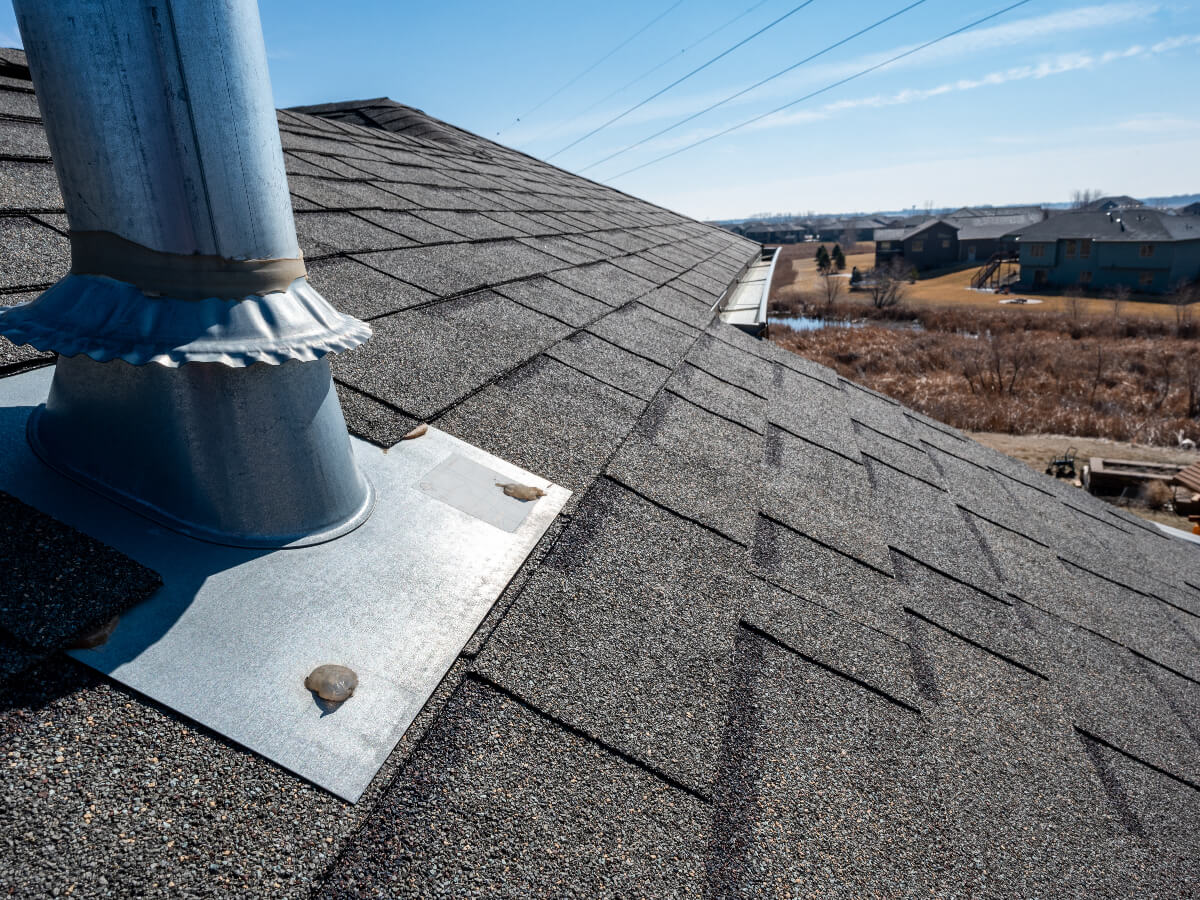
When homeowners think about leaks, they often picture missing shingles. But, the vast majority of leaks occur not in the large, flat sections of the roof, but in the areas where the roof changes direction, meets a wall, or features an obstruction. These vulnerable spots are protected by a system of thin, water-resistant material, usually metal, known as roof flashing.
Roof flashing is the most critical component in diverting water away from your home’s structure. If your flashing fails, a leak is guaranteed, leading to expensive damage. This guide explains why this overlooked metalwork is your home’s most important defense against water infiltration.
Deflecting Water in High-Risk Zones
The job of roof flashing is to create a seamless, watertight transition where two different surfaces meet or where the roof surface is interrupted. These interruptions – like chimneys, vents, skylights, and valleys – cannot be sealed adequately with shingles and caulk.
Roof flashing uses gravity and overlapping layers to ensure that any water running down the roof is smoothly channeled away from penetrations, preventing it from seeping into the building. The roof areas protected by metal flashing are non-negotiable weak points:
Chimneys and Skylights: These vertical structures create a ‘dam’ against flowing water. Flashing ensures water is directed around them.
Roof Valleys: The V-shaped channels where two roof planes intersect. Flashing provides a smooth, continuous water path.
Vents and Pipes: Any pipe or vent piercing the roof deck requires specialized pipe flashing (often called a boot) to seal the gap.
Dormers and Walls: Where the roof meets a vertical wall, step flashing is required to move water down and away layer by layer.
Recognizing the Different Types of Roof Flashing
A professional roofing system requires different types of flashing, each designed for a specific purpose:
Step Flashing: Used where the roof meets an obstruction (e.g., a chimney or dormer), individual small pieces of metal interlace with shingle courses to create an overlapping, shingle-like defense.
Valley Flashing: Installed in roof valleys (intersections of two roof planes), it provides a smooth, durable channel for large volumes of water runoff.
Counter Flashing: Used over base flashing on masonry (like chimneys), it is tucked into the masonry and bent over the base flashing to prevent water from running behind the base metal.
Pipe Flashing (Boots): Used to seal around vent pipes, this flexible seal keeps the entire system watertight despite temperature movement.
Dangers of Improper Installation
The biggest cause of roof leaks is not the failure of the flashing material itself, but improper flashing installation. Flashing must be layered correctly beneath the shingles and sealed in specific ways otherwise:
If the base layers are missed, water will wick underneath the metal.
If the flashing is fastened incorrectly, wind can catch it and pull it loose.
If the wrong material is used (e.g., mixing incompatible metals), corrosion will occur.
This is why roof flashing repair and installation should be entrusted to certified roofing professionals who understand the intricate layering techniques required.
When to Call for Roof Flashing Repair
Since flashing is covered or in hard-to-see areas, it can fail quietly. However, if you see any of the following, schedule an inspection immediately:
Visible Rust or Corrosion: The most common sign of material breakdown or incompatibility.
Caulking Failure: If you see dried, cracked, or missing caulk or sealant around vents or chimneys, the underlying seal is compromised.
Dampness Inside: Water stains on ceilings or walls near a chimney, vent, or vertical wall are the surest sign of a flashing failure.
Bent or Loose Metal: High winds can sometimes lift or bend metal flashing, leaving an opening for rain.
Ignoring failed roof flashing is one of the quickest ways to incur structural damage, wood rot, and mold growth in your attic and walls.
Secure Your Vulnerable Roof Spots Today!
Don’t wait for water stains to appear. If you suspect your roof flashing is old, damaged, or poorly installed, Gideon Roofing’s expert team can perform a comprehensive inspection on your roof’s most vulnerable points. We use high-quality, durable roof flashing materials and adhere to the industry’s strictest installation standards. Call today for your fee inspection!